There are many critical tasks a pilot must perform before an airplane takes off: pulling the flight plan, briefings with the flight attendants and gate agents, and performing a thorough safety and security walk around the aircraft, just to name a few.
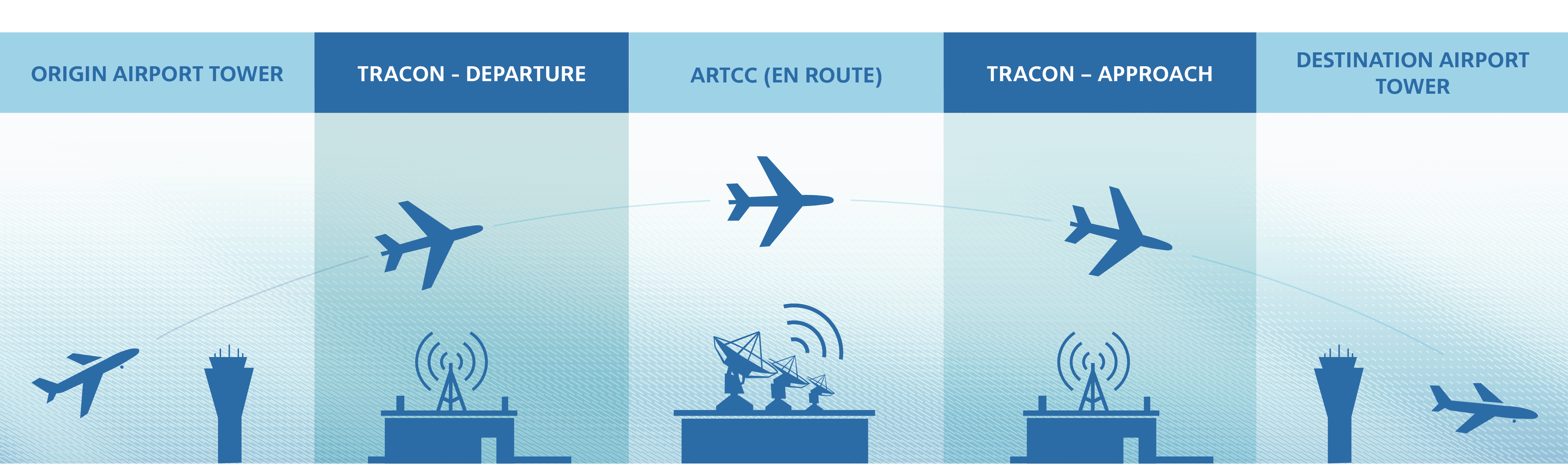
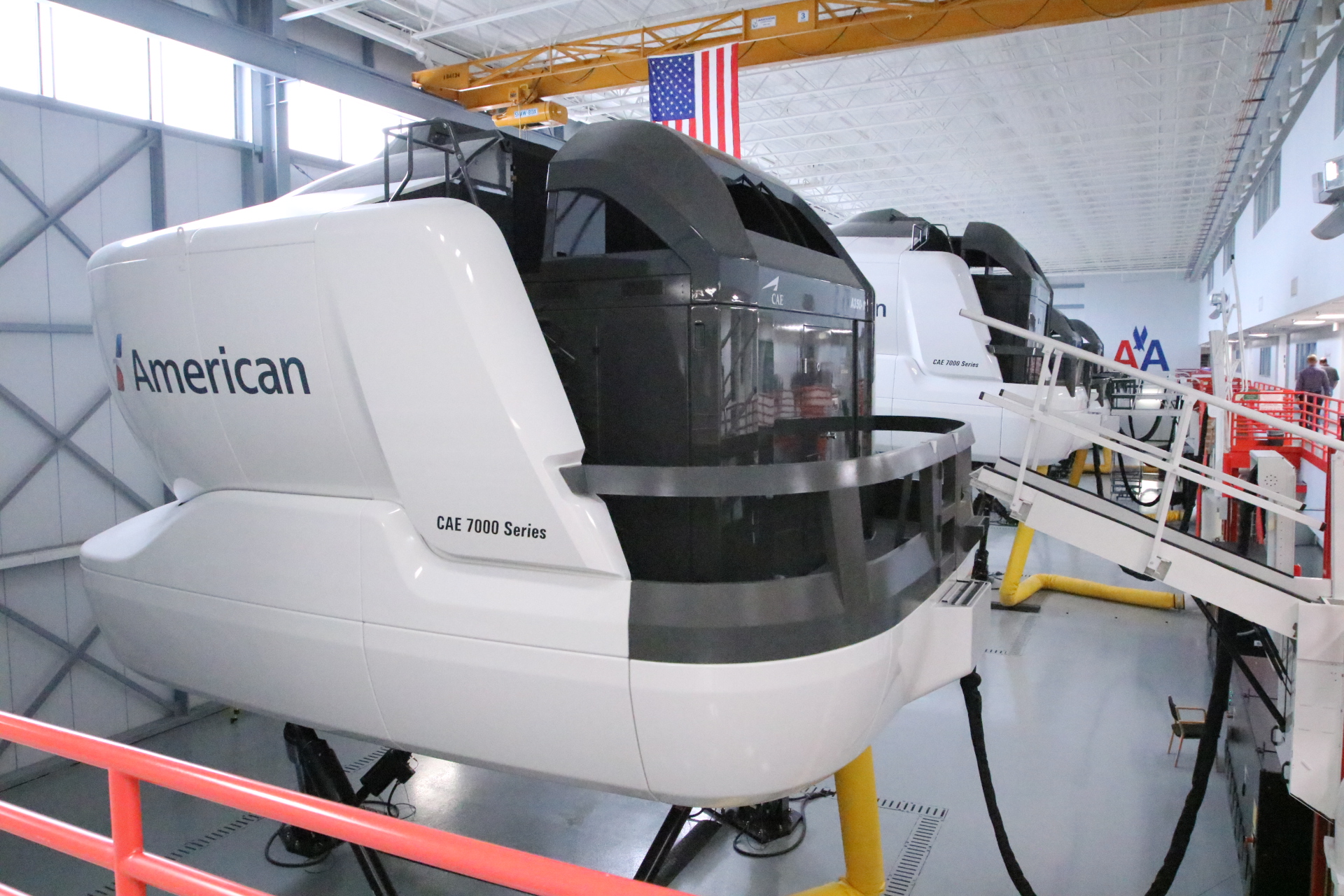
Most of these tasks are accomplished behind the scenes. That means many people, including the air traffic controllers who communicate with pilots from takeoff to landing, aren’t always familiar with what makes up a pilot’s pre-flight preparation. So recently, in an effort to improve the communication between pilots and air traffic controllers (ATC), American hosted a unique simulation-training program at our Flight Academy in Fort Worth. Each session included two check airmen and three FAA air traffic controllers in the cockpit of an Airbus simulator.
The objective: for the controllers and pilots to work together to better understand the operational challenges that both professions face.
“Many air traffic controllers have never been in a flight deck,” said Michael O'Brien, American’s manager of ATC and Airfield Operations. “They don’t know the pilot’s workload. The intent of this program is to brinHTMLg [the controllers] in here and show them the real impact of their inflight instructions.”
American’s state-of-the-art simulators feature high-resolution global satellite imagery, depicting a variety of environmental conditions that pilots could experience during various phases of flight. The sights, sounds and motions of the simulators are as close to the real thing as one can get without actually taking off.
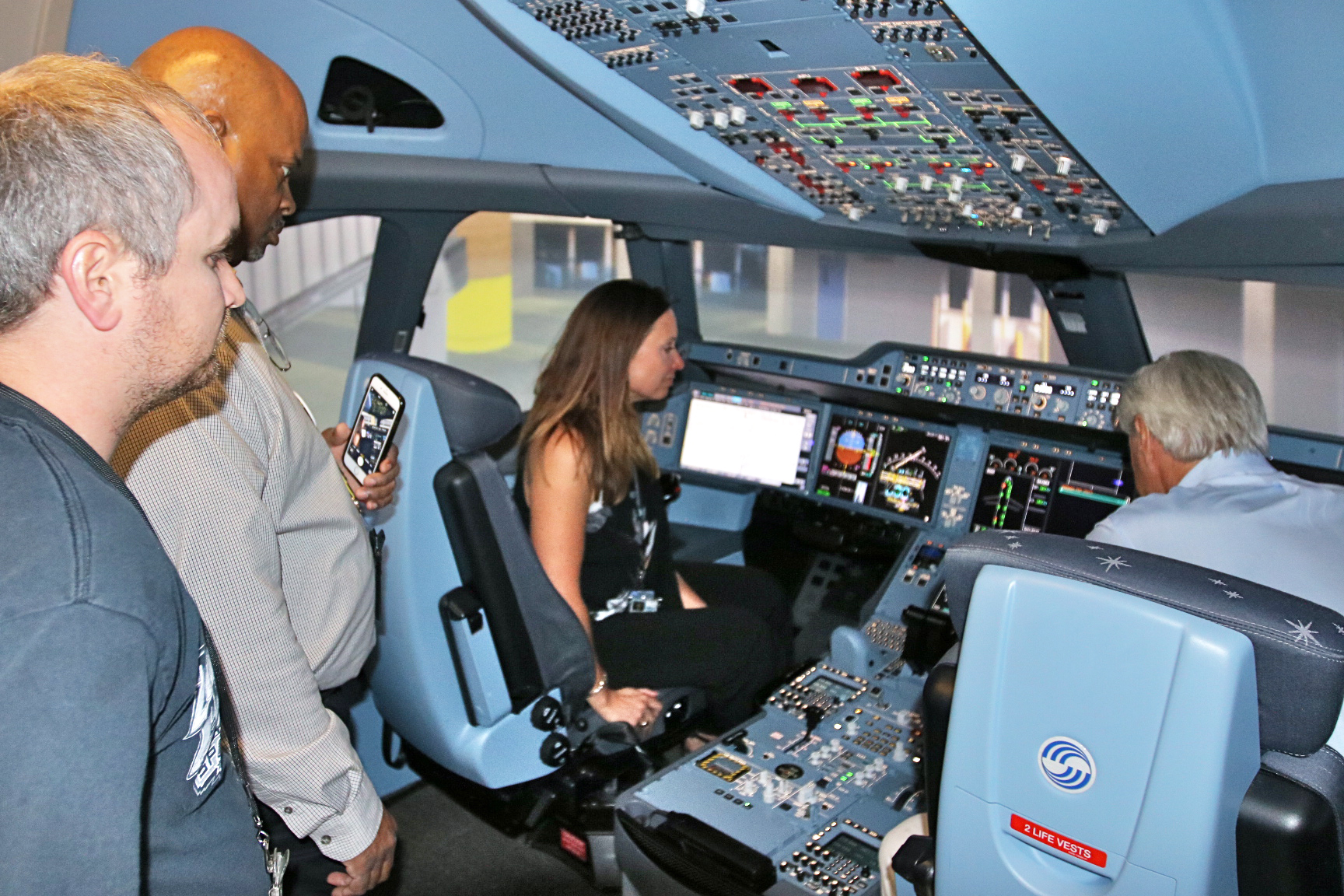
During a recent training session, Check Airman Michael Greene talked through the controls on the cockpit instrument panel with Penny Schneider from DFW Terminal Radar Approach Control (TRACON), and Michael Johnson and Chance Reese from the Fort Worth Air Route Traffic Control Center (ARTCC). “It takes a lot of information from so many team members to get us in the air,” Mike said.
He also walked through departure and arrival procedures, and discussed climbing, descending and taxiing to the runway. Check Airman Forrest Walton, stationed in the back of the simulator, manipulated a variety of weather conditions, changes in speed, elevation and noise levels.
The participants were able to see what a pilot deals with in real time and compare that to the instructions they verbalize over the radio. “It allows the controller the opportunity to understand potential limitations from the pilot’s point of view when weather or other factors are involved and then ask, ‘How can we help complete the picture?” said Tommy Graham, air traffic manager at the Fort Worth ARTCC.
Of course, the learning went both ways. Through these sessions, pilots were able to better understand how controllers move air traffic as well as measures for safe ground control. Those involved say it’s a win-win for all involved, with safety as the top priority.
“From our perspective, it has been nothing short of a stellar success,” Tommy said. “Controllers have emailed me, unsolicited. One said that it was the most meaningful training she’s had in her 10 years on the job.”
He added that other ATC facilities are hearing about the program and requesting more information about our efforts together.
“I don’t know of another program where the interest is unfettered — everyone is focused on the same goal,” Tommy said.
The simulation training program was a collaborative effort between American, Fort Worth Air Traffic Control facilities and the National Air Traffic Controllers Association (NATCA). If all goes well, American hopes to offer additional training opportunities in the future.